
How to Smoke Beef Short Ribs on a Pellet Smoker
Smoke beef short ribs at 107–121°C until they hit 71–74°C internal and the bark is set, then wrap them tightly in foil, push the smoker up to 150–177°C and cook on to 96–99°C — or, more reliably, until a probe slides in with almost no resistance. Rest them wrapped for an hour before slicing. A 2–3 kg rack feeds two, served over a bed of chimichurri, and the whole thing is done in about six hours.
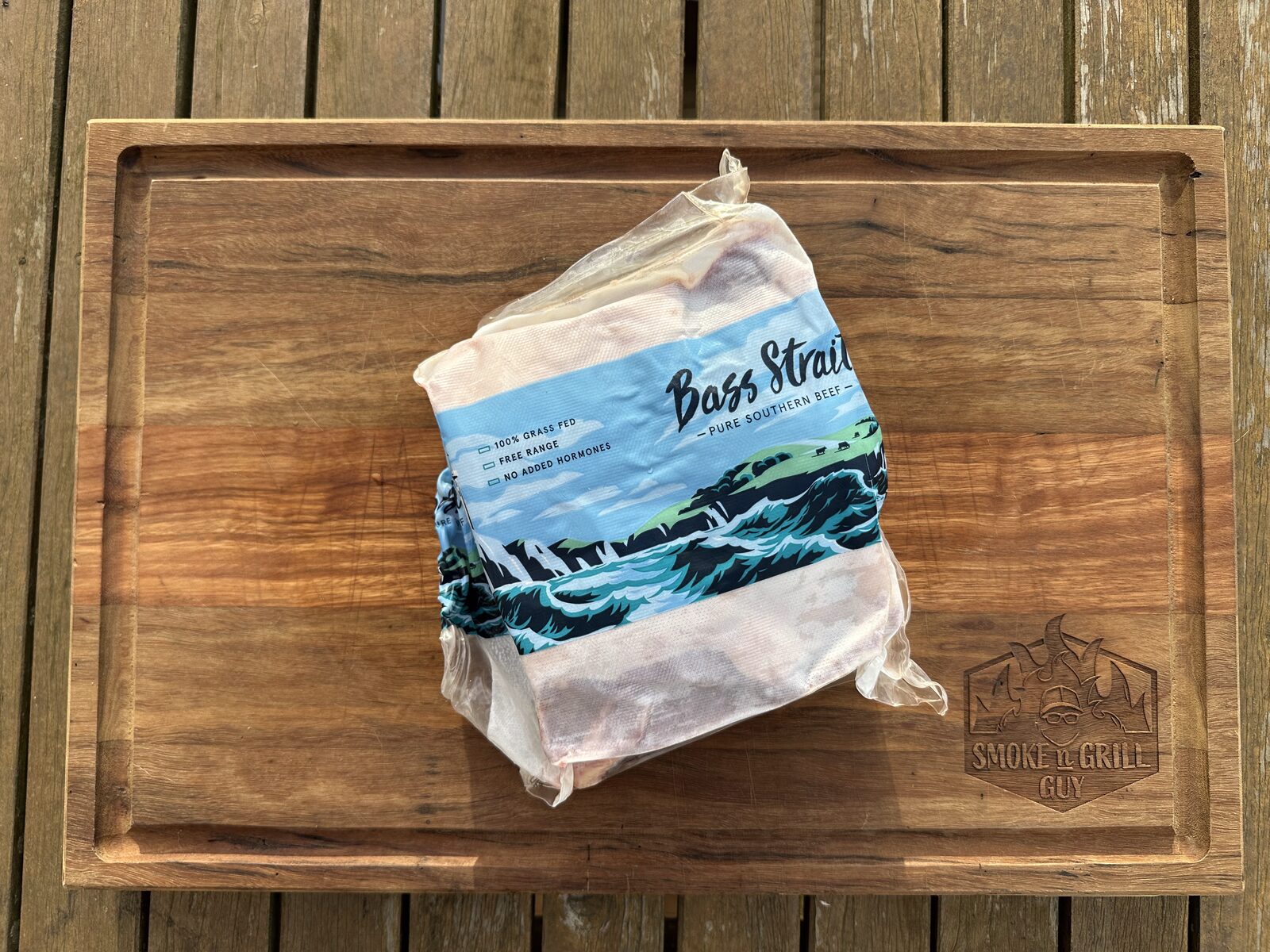
This cook was done as a collaboration with Bass Strait Beef. The method, the temperatures and what I think of the result are my own.
The short version
- Cut — Bass Strait Beef short ribs (beef plate ribs), 2–3 kg
- Smoker — Z Grills pellet smoker
- Fuel — Samba American hickory pellets
- Cook temperature — 107–121°C (225–250°F) unwrapped, then 150–177°C (300–350°F) once wrapped
- Wrap at — 71–74°C internal
- Pull at — 96–99°C internal, and probe tender
- Rest — 1 hour, still wrapped
- Serves — 2
- Total time — about 6 hours, prep to slice
- Timing — cook to temperature, not to the clock
Why this method works
Beef short ribs are the most forgiving big cut you can put on a smoker, and the easiest one to pull at the wrong moment. The forgiving part is the fat and connective tissue running all through the plate — there is so much of it that the meat will take hours of heat without drying out. The part people get wrong is trusting the thermometer alone.
The first gate, 71–74°C, has nothing to do with doneness. It is the point where the bark has set hard enough to survive being wrapped. Wrap earlier than that and the foil steams the crust straight back off.
The second gate, 96–99°C, is roughly where collagen has rendered into gelatin — but that point shifts from rack to rack depending on how much connective tissue is in it. This is why probe tender beats the display: when a skewer slides through the thickest part with no resistance, the collagen has gone, whatever the number says.
Most of the smoke is already in by the time the meat reaches 71–74°C. Past that point it takes on very little more, which means the back half of the cook is about tenderness, not flavour — and that changes what you are allowed to do with it.
So once the ribs are wrapped, there is no reason to keep the smoker low. Push it to 150–177°C. Sealed in two or three layers of foil with the rendered fat and juices trapped inside, you are closer to braising than smoking, and it moves fast. What you wrap in matters here too: foil is quicker than butcher paper, so if you are chasing time, use foil.
There is a twelve-hour version of this cook and there is nothing wrong with it — a long, low window gives fat and collagen all the time in the world to render, and if you have the day to give, give it. But most people don’t, and that is the whole point of doing it this way. Smoke properly for the first few hours, then get out of the way, and beef short ribs are a weekend afternoon rather than a whole day.
An hour still wrapped is plenty — long enough for the rendered fat and juices to settle back through the meat instead of running onto the board the second you slice. Brisket rewards a much longer rest, but it gets one in an esky, where it stays hot. Beef ribs do not need that, and the hour is not the point anyway.
What you want to avoid is letting them go cold. Beef ribs carry a lot of rendered fat, and a lot of connective tissue running between the bone and the muscle — and those are exactly the bits that go from silky to unpleasant as they cool. Cold steak is fine; it is a different mouthfeel and it holds up. Cold beef ribs are not. Eat them hot, or as close to just-sliced as you can manage.
The cut and the rub
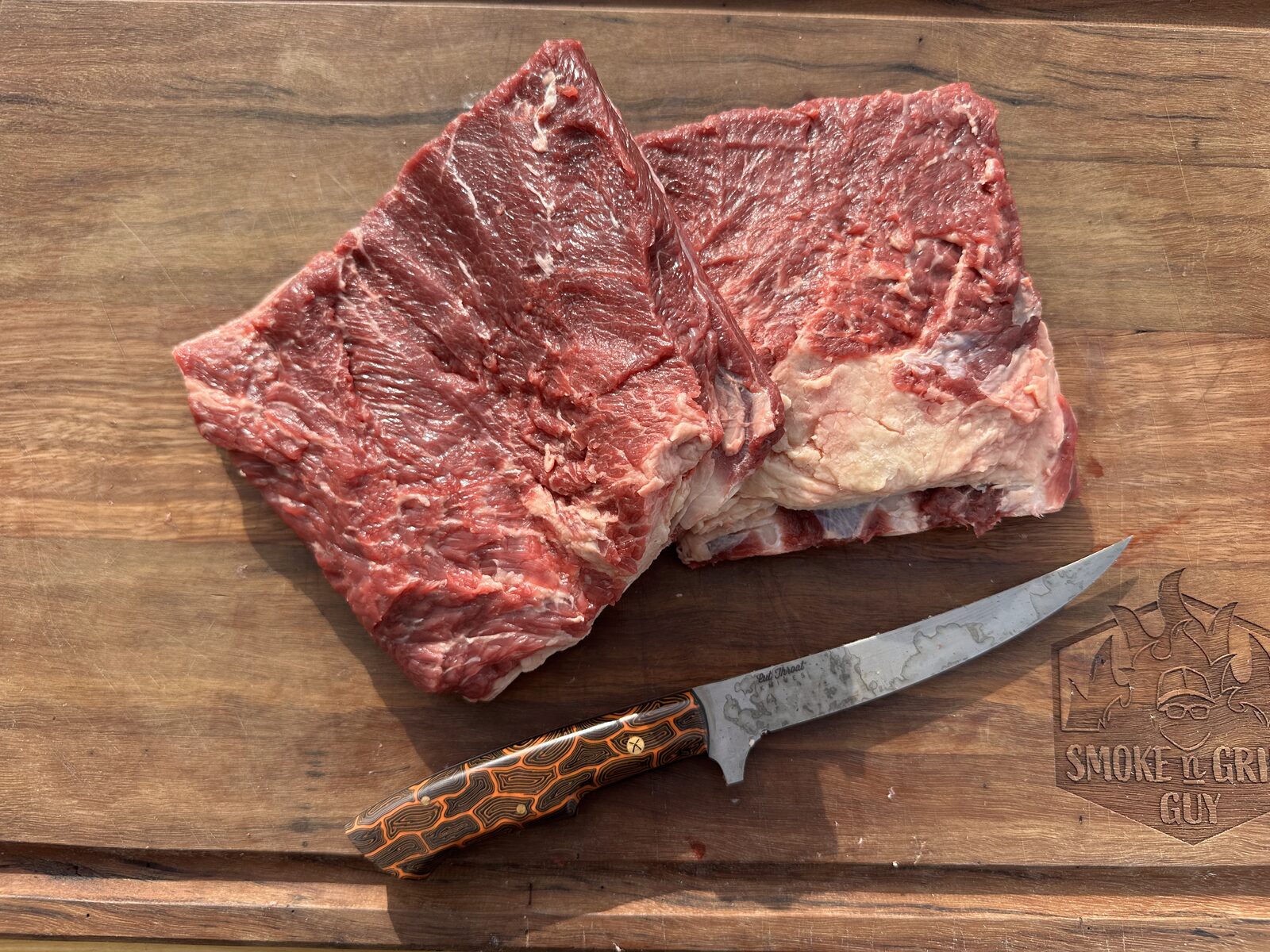
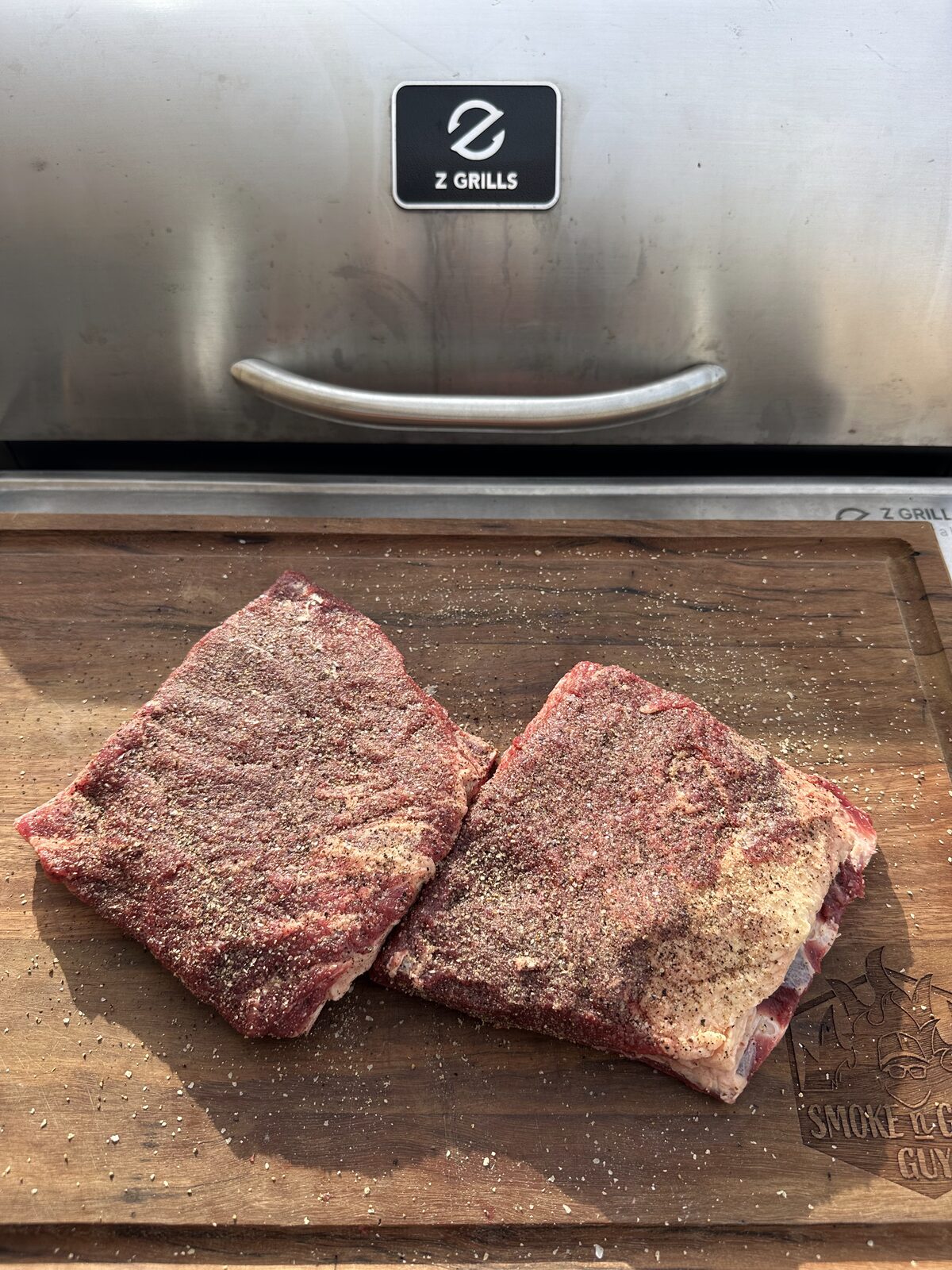
Ask your butcher for beef plate ribs — the big meaty ones, not the thinner flanken-cut short ribs, which are a completely different cook. A rack of three or four bones runs 2 to 3 kg.
Trimming matters more than people expect. The top layer of fat and silver skin comes off so the rub can reach the meat. On the underside, take out the membrane between the bones — it exposes more surface and lets the seasoning get in where it counts.
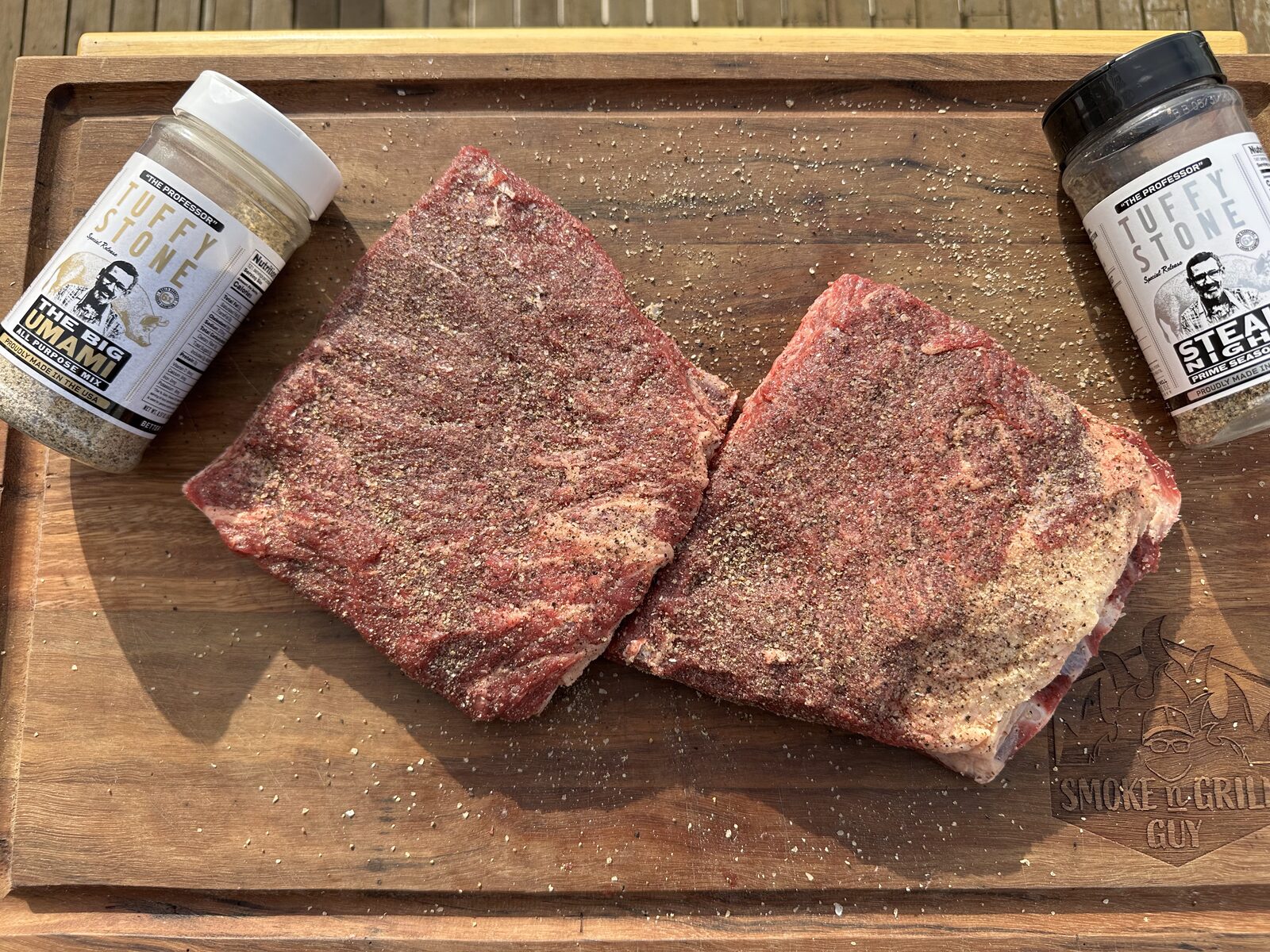
Two rubs go on, Tuffy Stone’s Big Umami first and Steak Night over the top.
On the smoker
This cook ran on a Z Grills pellet smoker with Samba American hickory pellets, sitting at 107–121°C through the smoking stretch before the temperature went up for the wrap. Any smoker that holds a steady temperature will do the job — pellets just make holding it easier.
Watch the cook
If the embed does not load, the cook is on Instagram here: Smoked Beef Short Ribs, posted by @smokengrillguy.
Notes from the cook
The big thing for me on this cook was just how quickly it went once it was wrapped in foil. You can really pump it through at that point.
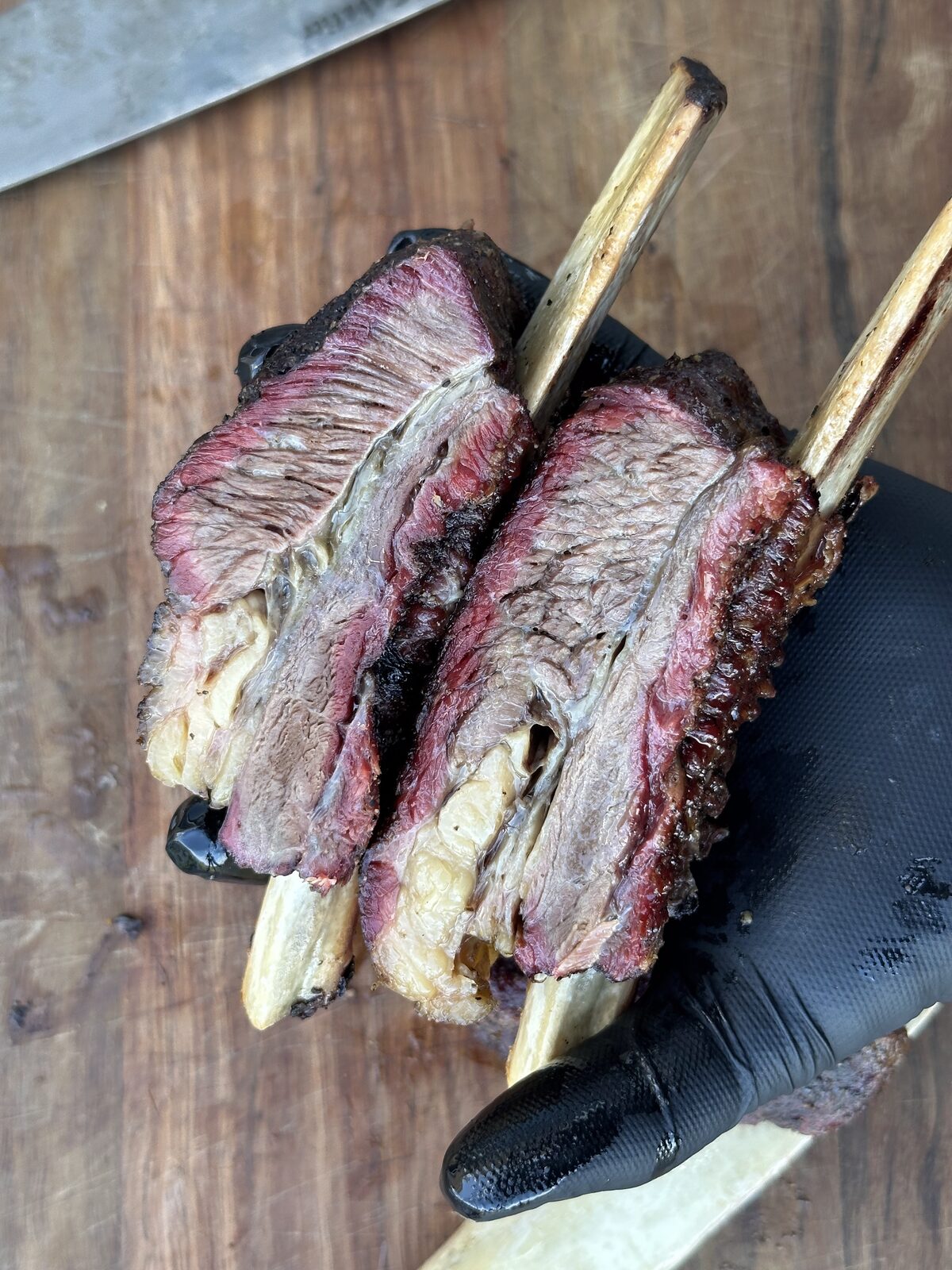
It came up nice — properly probe tender, and the bone slipping out really easily. That is the one that tells you. Getting there just takes a bit of patience sometimes.
The Z Grills and the Samba hardwood pellets are amazing for temperature control. Pro tip though — get yourself an instant read thermometer.
Questions people ask
What are beef short ribs called in Australia?
Beef plate ribs, or simply beef short ribs. They come from the lower rib section and are sold in racks of three or four bones, usually 2–3 kg. Ask your butcher for plate ribs rather than the thinner flanken-cut short ribs, which are a completely different cook.
How long do beef short ribs take to smoke?
This one runs about six hours from prep to slice — roughly half an hour of trimming and seasoning, two to three hours of smoke, a wrapped stretch at higher heat, then an hour’s rest. Thickness and how steady your smoker runs will move that around, which is why the final call is probe tender rather than a timer. You can stretch it out low and slow across a whole day if you want to. You just don’t have to.
Do I have to wrap beef short ribs?
No, but wrapping shortens the stall and keeps the meat moist through the back half of the cook. The trade-off is that the bark softens slightly under foil. Wait until the bark is properly set at 71–74°C and that trade-off is small.
Why is probe tender more reliable than a target temperature?
Because collagen renders at slightly different points in different racks. 96–99°C is a guide, not a finish line. When a probe or a skewer slides through the thickest part of the meat with no resistance, the connective tissue has broken down — and that is the actual signal that they are ready.
Can I cook beef short ribs without a smoker?
Yes, though you give up the smoke. Beef ribs take well to a slow cooker or a pressure cooker, both of which break down the same connective tissue using time and moisture rather than heat and airflow.
What else goes well with them?
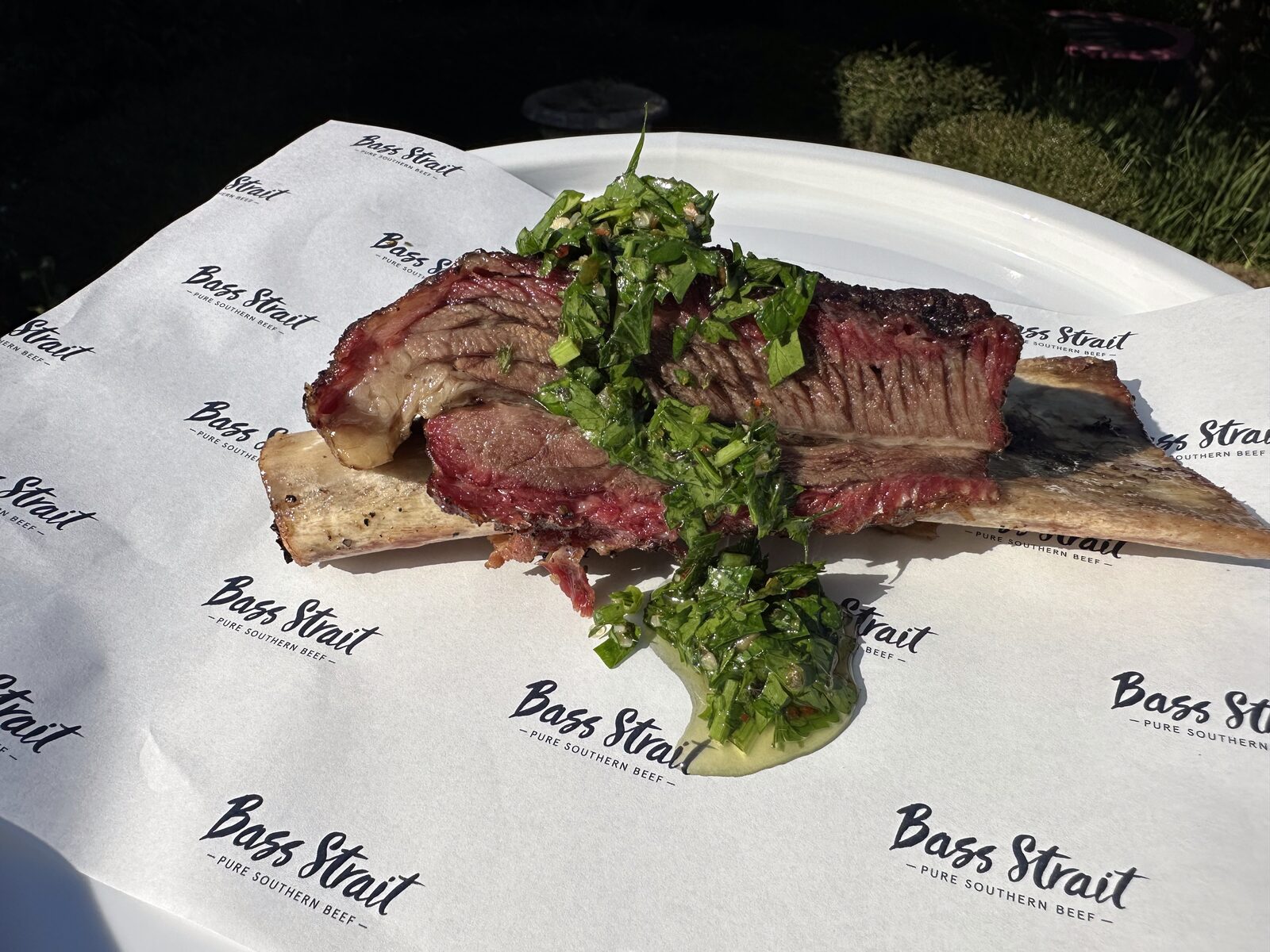
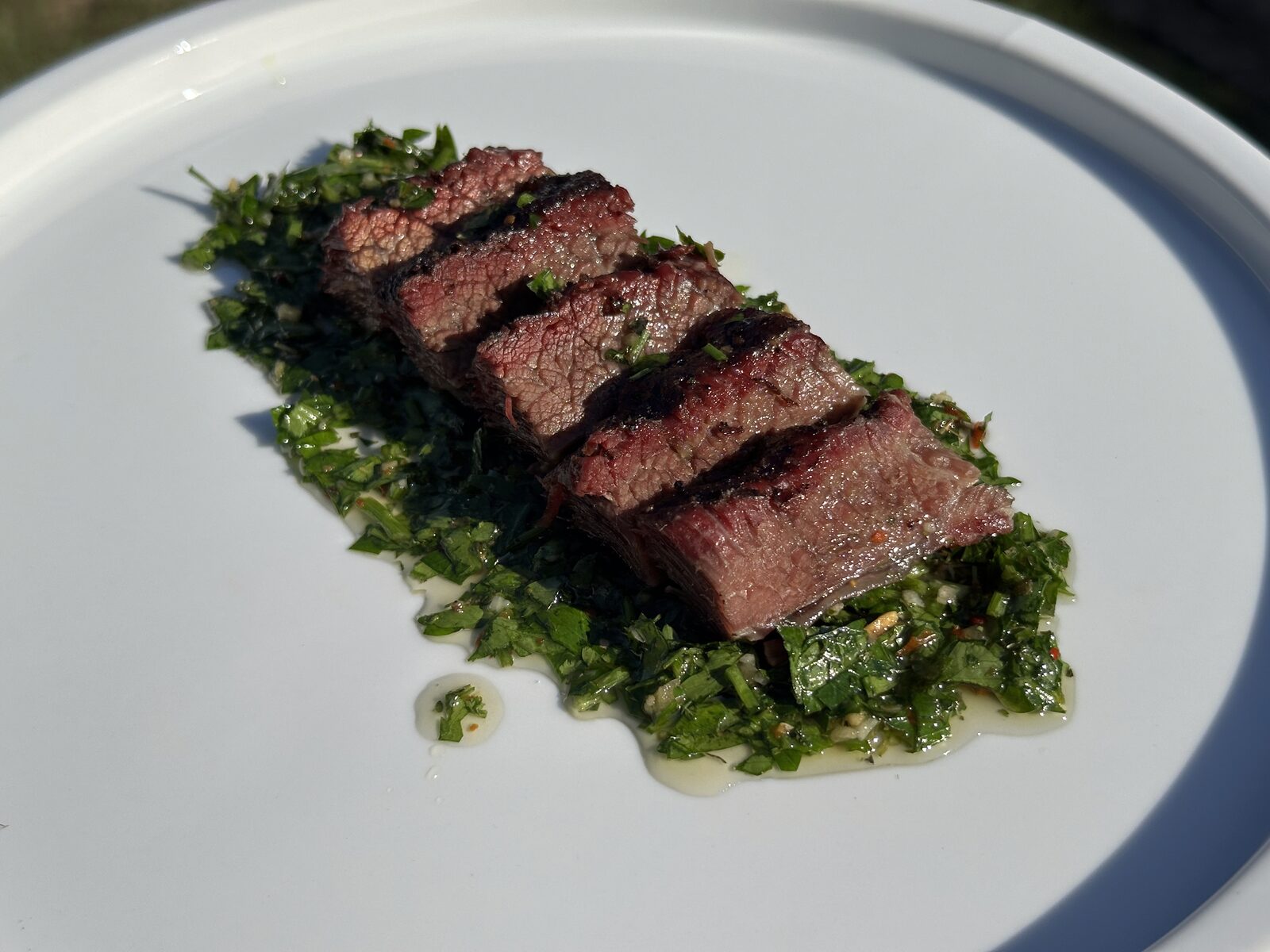
Chimichurri cuts straight through the fat, which is why it works so well here. Anything sharp does the same job — a vinegar-forward slaw, pickled onions, or just a squeeze of lemon over the top.
Smoked Beef Short Ribs
Ingredients
Method
- Trim the top layer of fat and silver skin to expose the meat. On the underside, trim the membrane between the bones so more meat is exposed and the seasoning can get in.
- Season generously all over with Big Umami, then Steak Night. Let the ribs sit with the rub on for about an hour before they go near the smoker.
- Set the smoker to 107–121°C (225–250°F).
- Put the ribs in bone-side down and cook until they reach 71–74°C (160–165°F) internal, checking the probe every hour or so. The bark should be well set by this point. Expect two to three hours.
- Wrap tightly in foil — two or three layers — and return them to the smoker, pushing the temperature up to 150–177°C (300–350°F). Once they are wrapped they stop taking on smoke, so the higher heat costs you nothing in flavour and buys you hours.
- Keep cooking until they reach 96–99°C (205–210°F) — but more importantly, until they are probe tender. The probe should slide through like butter, with almost no resistance.
- Rest, still wrapped, for about an hour. Do not let them go cold — the rendered fat and the connective tissue between bone and muscle are far better eating hot.
- Slice between the bones and serve over a bed of chimichurri, with extra on the side.
- Combine the parsley, garlic, oregano and chilli flakes in a bowl.
- Add the red wine vinegar and mix, then slowly stir in the olive oil.
- Season with salt and pepper, then let it sit for at least 15–20 minutes before serving so the flavours come together.
Notes
More low ‘n slow cooks
- How to cook St Louis Cut Pork Ribs — the same wrap-and-probe logic on pork
- Cooking the Perfect Brisket in your Bradley Smoker — the other big cut worth learning
- Pressure Cooked Sticky Chilli Beef Ribs — beef ribs when you have not got all day
- Slow Cooker Beef Ribs in Smoked Chipotle BBQ Sauce


